Rooted in Calm: How Nature Supports Regulation, Learning, and Connection

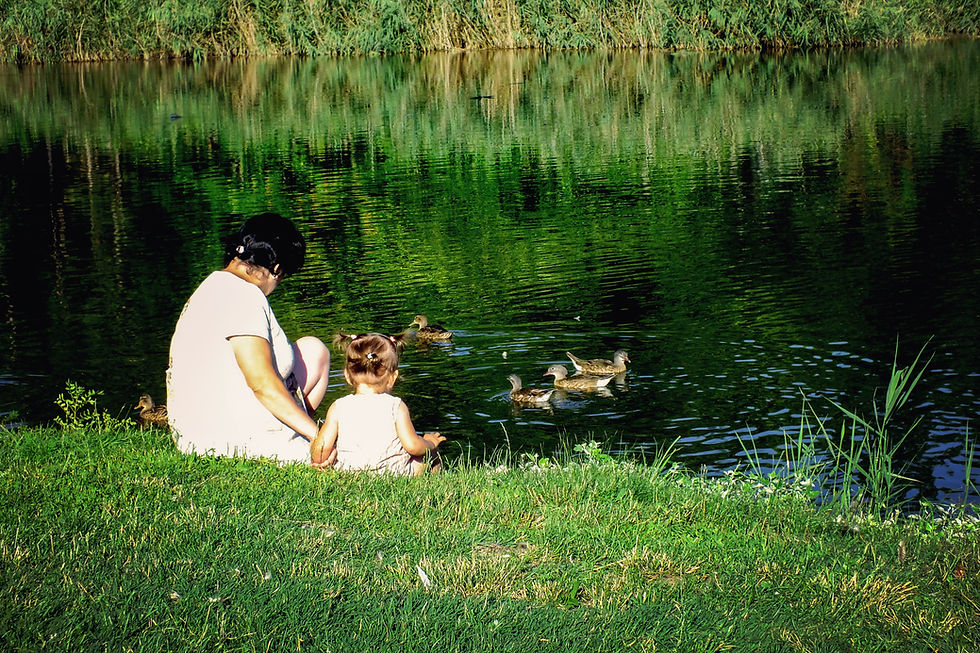
There’s something that happens when we step outside that is hard to replicate within four walls. The pace softens. Breath deepens. The constant hum of urgency quiets just enough to notice what’s right in front of us—the rustle of leaves, the rhythm of footsteps, the feeling of being part of something living and interconnected.
From our perspective, nature is not simply a backdrop for learning. It is an active participant. On a small farm, learning doesn’t always begin at a table. It unfolds organically between garden beds, in our forest and meadow, beside the chicken coop, and in the gentle presence of sheep grazing nearby. These spaces invite regulation before expectation. When the nervous system feels safe, communication has room to grow.
Nature is inherently regulating because it meets the nervous system with patterns it recognizes as safe and predictable. Things like the gentle repetition of waves, the sway of branches, and birdsong at varying distances are known as “soft fascinations,” experiences that capture attention without overwhelming it. Unlike the fast, bright, and often demanding stimuli of screens or busy indoor environments, nature allows the brain to rest while still staying engaged.
There is also a sensory richness in natural environments that supports whole-body regulation. Uneven ground encourages balance and coordination. Fresh air supports deeper breathing. Natural light helps regulate sleep-wake cycles. The act of touching soil or observing animals can shift the body out of a stress response and into a more grounded, connected state. When the body feels organized and calm, attention, learning, and communication follow more easily.
In this environment, language becomes more purposeful. Words are not practiced in isolation. Rather, they’re used to ask for more sheep snacks, to describe the color of a leaf, to share excitement over a freshly collected egg. Communication becomes something we do, not something performed on demand.
There is also a quiet invitation to slow down. In a world that often pushes for faster progress and measurable outcomes, nature reminds us that growth is not linear. Seeds take time. Trust takes time. So does language. Honoring that pace often leads to deeper, more sustainable progress.
This approach supports people across the lifespan because it meets each individual where they are. Whether building early communication skills, navigating sensory differences, or reconnecting with a voice later in life, nature provides a steady, nonjudgmental place to begin.
And just as importantly, it brings joy back into the process. There is laughter when a chicken wanders too close, curiosity when something new sprouts in the garden, and a sense of calm that lingers long after the session ends.
For families, connecting with nature does not require access to a farm or wide open land. Small, intentional moments can offer the same regulating benefits.
With access to outdoor space:
• Take slow walks and follow your child’s lead—pause to notice bugs, leaves, or sounds
• Create simple rituals like watering plants, collecting rocks, or watching the same tree change over time
• Eat a snack outside and describe what is seen, heard, and felt
• Visit local parks regularly to build familiarity and a sense of safety
With limited or no outdoor space:
• Open windows to let in fresh air and natural sounds
• Grow herbs or small plants on a windowsill and involve your child in their care
• Use natural materials indoors—pinecones, sticks, shells—for play and exploration
• Sit near natural light and observe weather changes together
• Incorporate moments of stillness, like listening for distant sounds or noticing shadows moving across a room
These experiences don’t need to be elaborate to be effective. What matters most is the opportunity to slow down, tune in, and share attention.
Therapy, at its core, is about connection. Connection to self, to others, and to the world around us. Nature makes that connection feel more accessible, more intuitive, and deeply human.


Comments